A Narrative of Unity and Action
Our mission is to bridge the gap between financial investment and nature conservation by fostering collaboration, innovation, and the development of actionable, high-impact projects. We bring together investors, policymakers, communities, and innovators to accelerate the transition toward a more sustainable, resilient, and inclusive future.
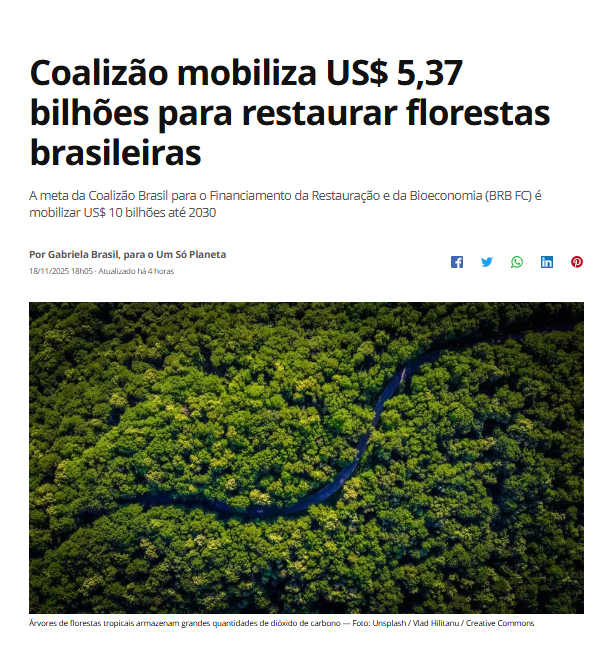
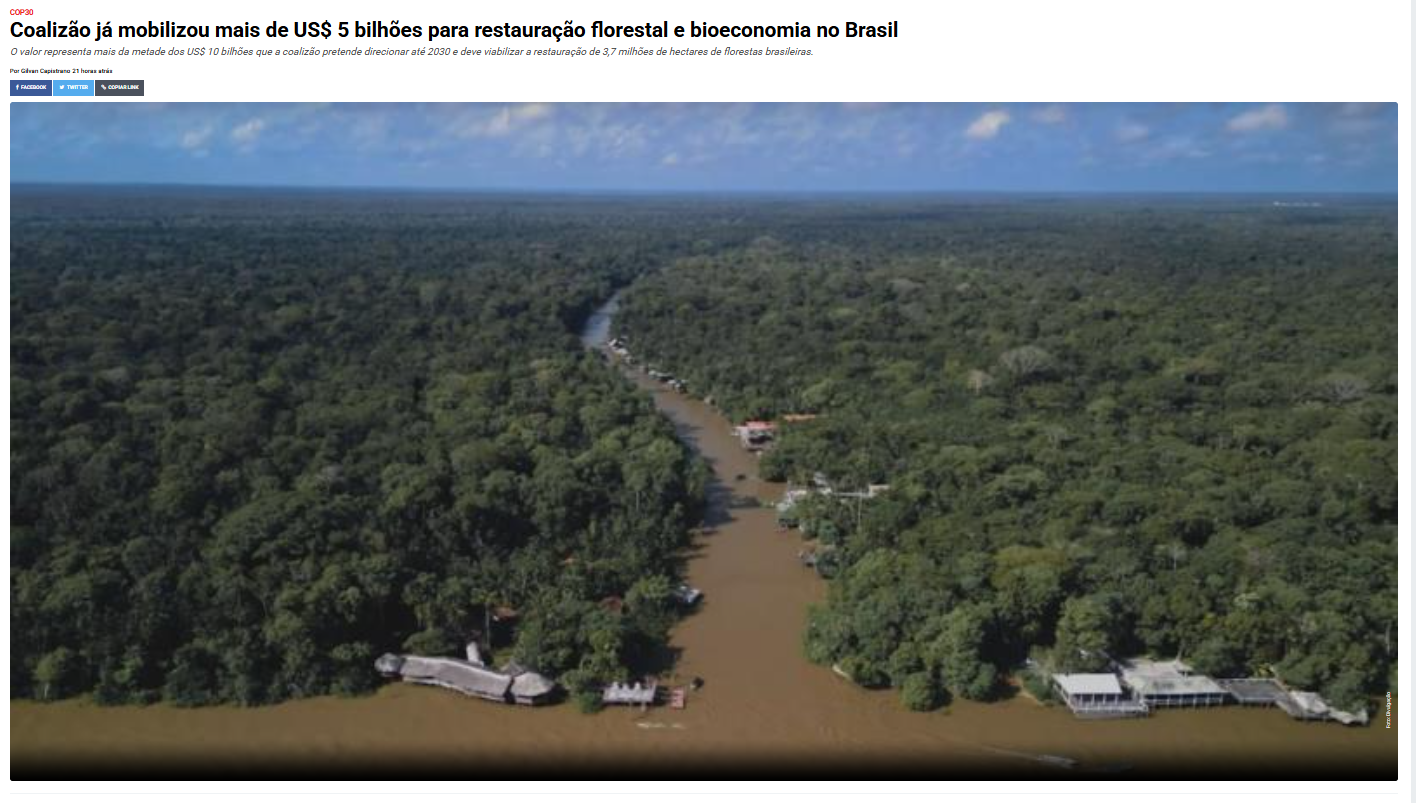
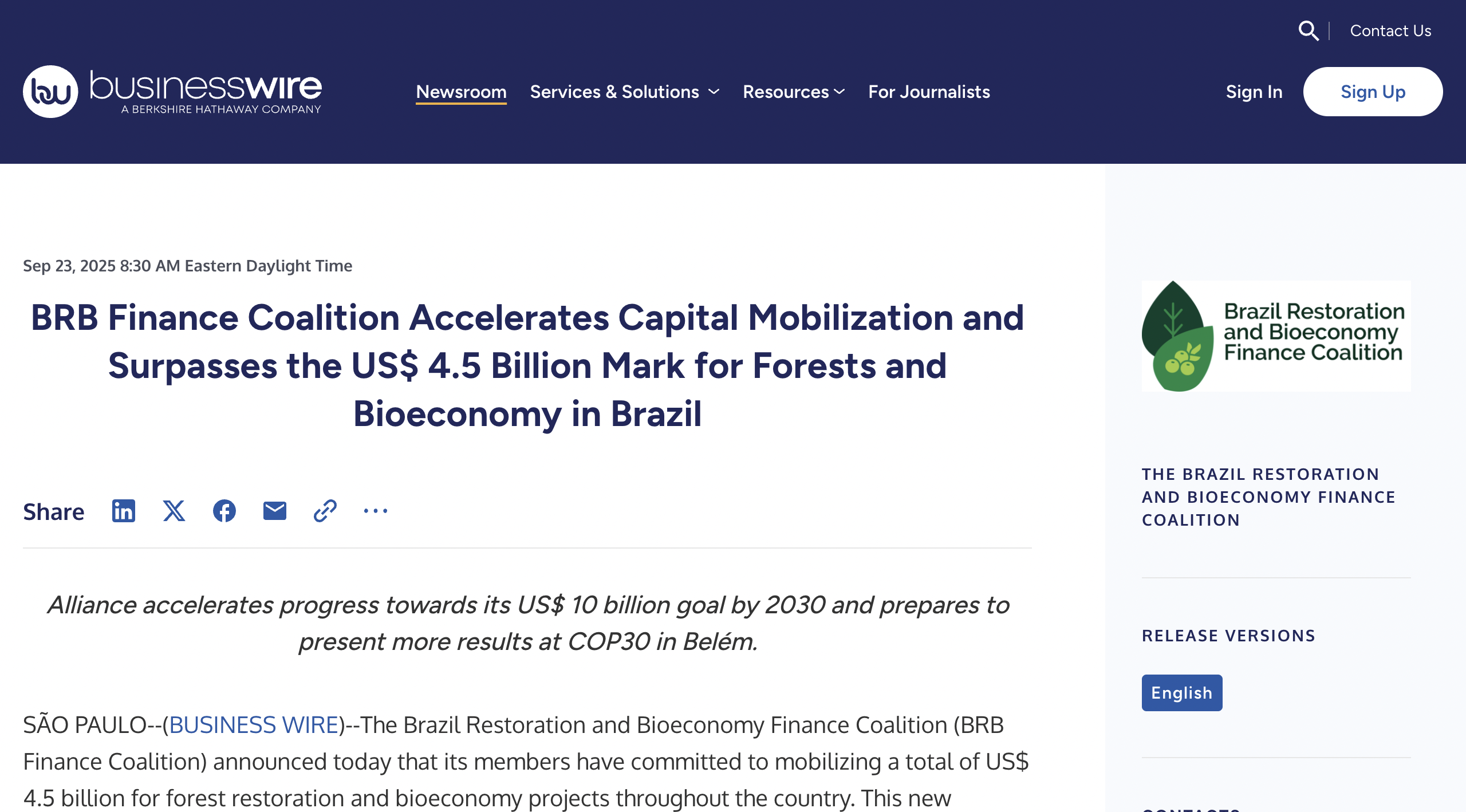
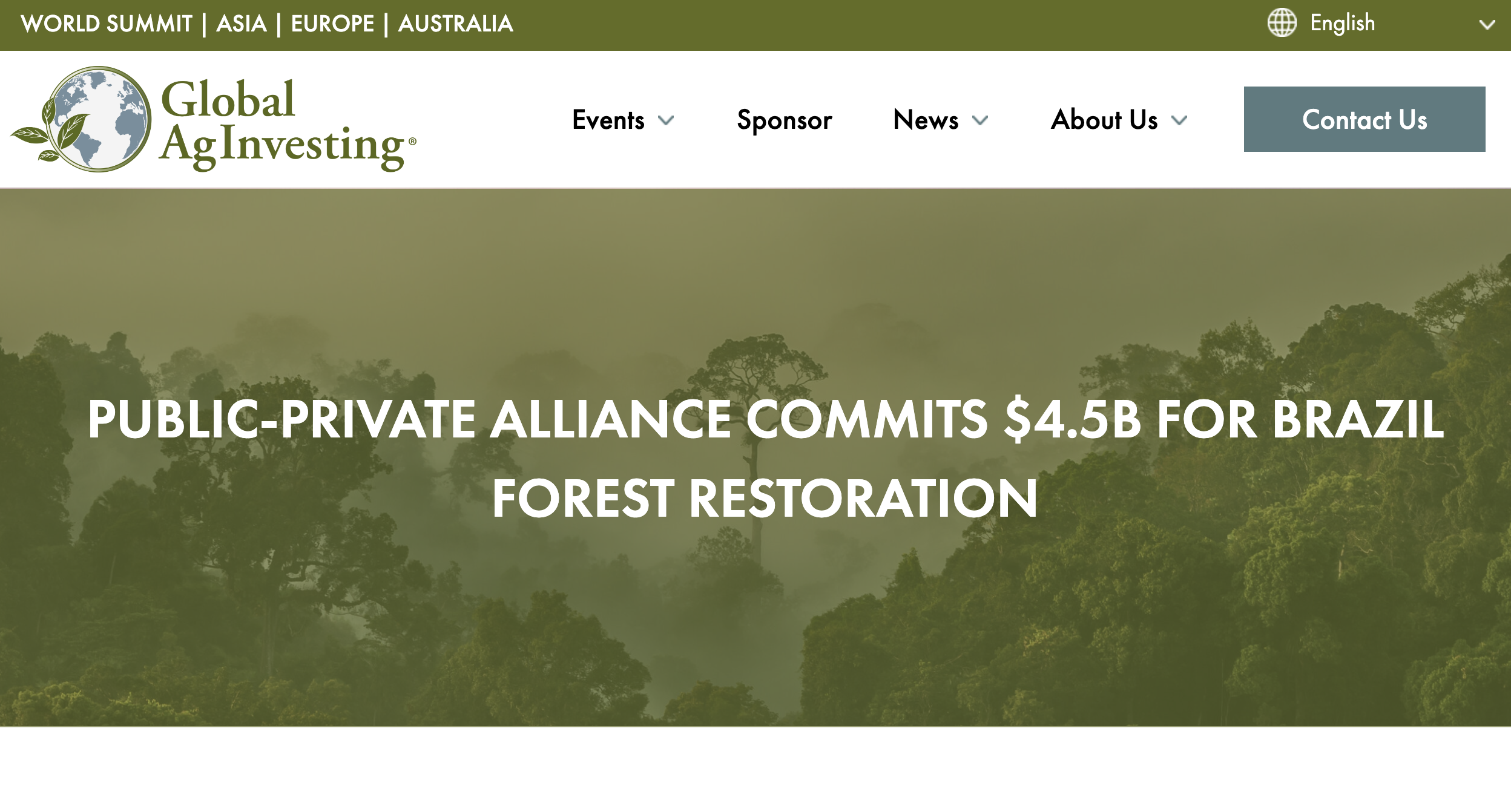
The Brazil Restoration & Bioeconomy Finance Coalition (BRB FC) is a public-private initiative dedicated to mobilizing capital at scale to advance forest restoration and unlock the growth of Brazil’s bioeconomy. By leveraging the country’s unparalleled natural capital and evolving policy landscape, the Coalition supports high-integrity projects capable of delivering measurable climate, biodiversity, and socioeconomic outcomes — contributing to the transition to a low-carbon, nature-positive economy.
Launched on the margins of the G20 Summit in Brazil in November 2024, the Coalition quickly gained international momentum. In January 2025, it was featured at the World Economic Forum in Davos during a high-level panel alongside BTG Pactual, Conservation International, and climate scientist Carlos Nobre (BNDES), reinforcing its relevance within the global climate and nature finance agenda.
The Coalition was founded by leading financial institutions, environmental organizations, and development partners, including Agni, Banco do Brasil, BNDES, Biomas, BTG Pactual, Conservation International, The Nature Conservancy, the U.S. Department of State, the World Economic Forum, the World Bank Group, IDB Invest, Instituto Arapyaú, the Institute for Climate and Society (iCS), Instituto Itaúsa, Mombak, Regia Capital, and re.green. Today, the initiative brings together 30 prominent institutions — including major private-sector players — and continues to expand as new members join the alliance.
Key findings
High conservation value: Community enterprises operate in territories with comparatively lower deforestation rates, driven by collective governance models and sustainable land-use practices.
These territories are estimated to avoid or sequester between 40.7 and 104.5 million tCO₂e per year. This is equivalent to the annual emissions of 8 to 20 million passenger vehicles, or 10–25% of Brazil’s yearly emissions from deforestation.
Market activity: While 81% of enterprises operate primarily in local or regional markets, 33% have already reached export markets, indicating growing integration into global value chains.
Climate impacts: 86% report experiencing direct impacts from extreme climate events, including droughts, wildfires, and flooding.
Funding gaps: Although 76% have accessed some form of funding, only 38% have secured investment capital (such as loans) — highlighting persistent barriers to scaling community-based businesses.